
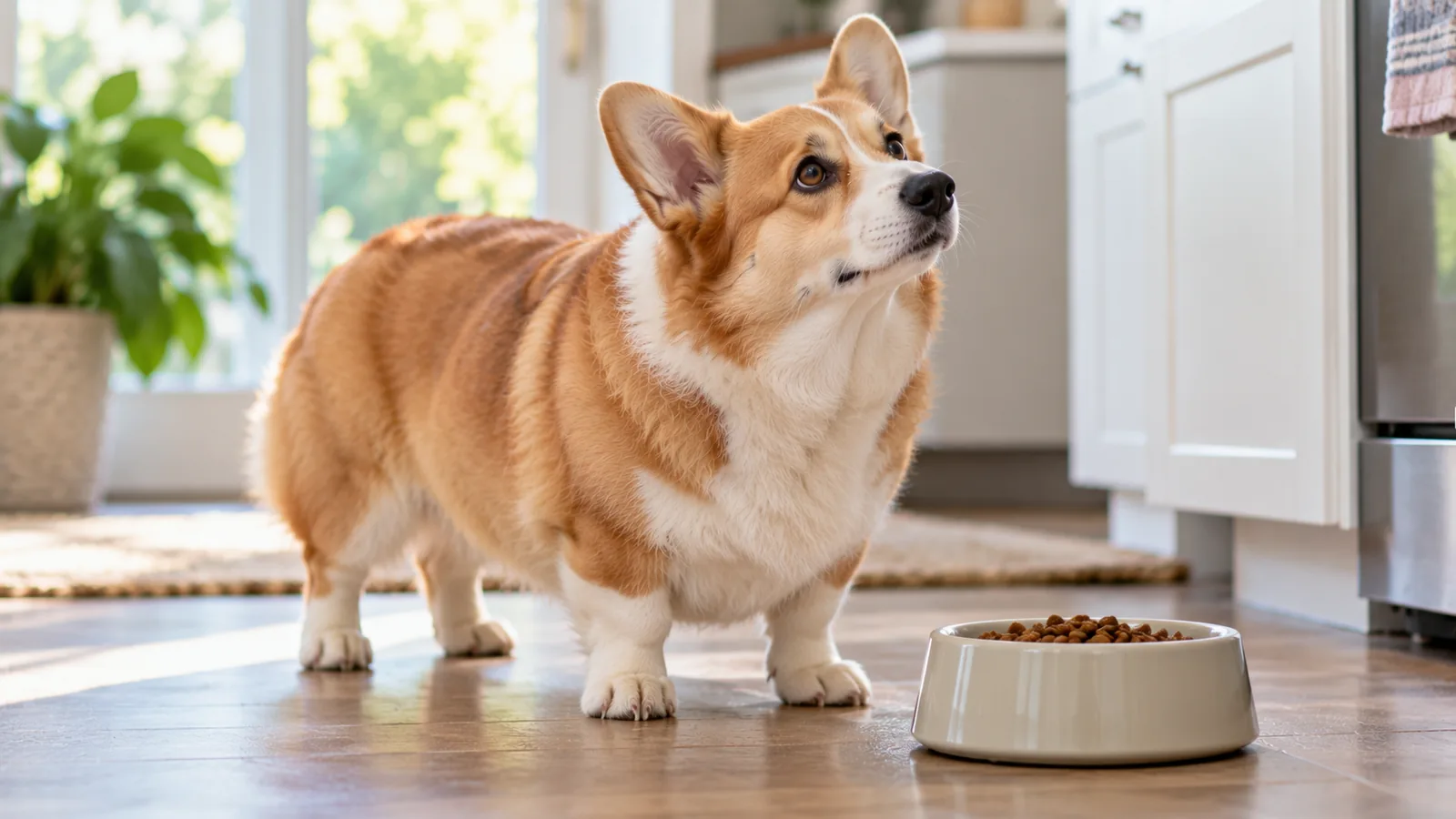
A calorie calculator can give you a solid starting point for how much to feed your dog or cat, but it can't give you the final answer on its own. It turns your pet's weight and body condition into a daily calorie target, and you still have to convert that number into cups or cans using the calories listed on your pet's food, count the treats, and then check whether it's working. Age, activity, spay or neuter status, health conditions, and even the season all shift what your pet actually needs. The real test is your pet's body: a quick hands-on check of fat and muscle every few weeks tells you whether to keep the scoop where it is or adjust it.
Figuring out the right amount is much easier with someone who can put hands on your pet. At Bayview Animal Hospital in Saint Petersburg, wellness exams include a weight check and a hands-on score of both fat and muscle, so we can turn a calculator's estimate into a real scoop size, a feeding schedule, and a food that fits your household. We also look for anything that could throw off the math, from a slow thyroid to sore joints that have cut your dog's walks in half. Request a weight consultation and we'll help you find the right amount, then show you how to check your pet's body condition at home between visits.
Before You Change the Scoop, Start Here
- A calorie calculator gives you a starting number, not a final answer, and the right amount shifts with your pet's age, activity, and body condition.
- The scale can't tell you whether your pet is losing fat or losing muscle, which is why we score both by hand.
- Treats, chews, and table scraps can make up a quarter or more of a day's energy, so measure the whole day's food in the morning.
- A sudden weight change or a cat who stops eating calls for a medical workup before any feeding change.
Why Does Calorie Counting Matter If You're Already Measuring Meals?
Measuring cups keep portions consistent, but they say nothing about how much energy is in the bowl. The chart on the bag is a population average, and how much to feed a specific pet depends on age, activity level, spay or neuter status, and current body condition, which together can shift the target by a third or more.
Pet food is dense. A cup of one kibble can hold 300 kcal and a cup of another closer to 500, so the same scoop is feeding two very different diets. Just ten extra kcal a day, about one small cat treat, can add up to a pound of gain over a year on a ten-pound cat, or ten percent of their body weight.
Protein protects lean muscle while fat comes off, which is the entire point of a good weight plan. Fat itself carries flavor and more than twice the energy per gram of anything else in the dish, so small amounts move the number fast. Fiber adds bulk without much energy, letting a pet eat a satisfying volume on a smaller budget. Nutrition counseling is where those pieces get matched to your dog or cat instead of to an average one.
How Does Body Condition Scoring Work, and Can You Check It at Home?
Two pets at the same weight can have completely different body composition, so we score by hand. Body condition scoring runs on a nine-point scale, and an ideal 4 or 5 means ribs are easy to feel under a thin layer of padding, a waist is visible from above, and the belly tucks upward when viewed from the side.
Lean muscle is what supports movement, metabolism, and recovery from illness, and a pet can hold a steady number on the scale while quietly losing it.
| Where they land | What you see | What your hands find |
| Too thin (1 to 3) | Sharp hourglass, hips and shoulders standing out | Ribs and spine obvious with almost no covering |
| Ideal (4 to 5) | Clear waist behind the ribs, upward tuck from the side | Ribs easy to feel through thin padding |
| Overweight (6 to 7) | Waist softening or gone, back looks broad | Ribs take real pressure to find, fat over the spine and tail base |
| Obese (8 to 9) | Sides bulge, no tuck at all | Ribs hard to locate, fat pads on the chest, hips, and belly |
Run the check once a month, more often while a plan is underway. Three quick looks tell you most of it:
- From above: stand over your pet and look for a waist that narrows behind the ribcage.
- From the side: the belly should slope up toward the hind legs, not run flat or sag.
- By feel: run flat palms along the ribs with light pressure, the way you'd feel the back of your own hand through a thin sleeve.
Coats lie. A fluffy cat or a double-coated dog can look round and score a 4, or look fine and score a 7, so hands beat eyes every time. Muscle gets its own pass: press along the spine, over the skull, and across the thighs, where thinning shows up first. Ask our veterinarians to put your hands in the right spots at your next visit.
How Do You Use a Pet Calorie Calculator Correctly?
A calorie calculator turns current weight and body condition into a daily calorie target, with the option to set aside part of that total for treats, though the number it returns is a starting estimate rather than a prescription. Test it for a few weeks and adjust from what you see and feel.
Five things to have in front of you before you start:
- Today's weight: a real number off a scale, not a guess from last year's visit.
- An honest score: the 1-to-9 number you just checked, not the one you're hoping for.
- Energy per cup or can: printed as kcal/cup in small type on the label or available from the manufacturer.
- Everything else that goes in: training rewards, chews, the cheese hiding a pill, whatever the neighbor slips over the fence.
- A recheck date: two to four weeks out, so you're adjusting on evidence instead of impatience.
What a formula can't see is the rest of your pet's life: a low thyroid, a heart medication, a sore hip that cut walks in half, or a Saturday spent swimming. Needs move with the calendar here too. In a Saint Petersburg August, walks get shorter and the same scoop starts doing damage, then October arrives and that same pet needs more. A wellness visit is where a target becomes a real scoop size, a feeding schedule, and a food that fits your household.
Where Are the Hidden Calories Coming From?
Calories in treats add up faster than most households expect, since one large biscuit or a single chew can account for a quarter of a small dog's entire daily energy allowance. Add training rewards, a crust of toast, and a second family member who didn't know about the first, and a carefully measured plan comes apart by dinner.
| What's handed over | Roughly | Share of a 20-pound dog's day (about 450 kcal) |
| Large biscuit | 100 kcal | Close to a quarter |
| Medium dental chew | 70 to 90 kcal | About a fifth |
| Slice of processed cheese | 70 kcal | About a sixth |
| Tablespoon of peanut butter | 95 kcal | Just over a fifth |
| Baby carrot or a few green beans | 4 to 8 kcal | Barely a rounding error |
Scale that down for cats and it gets sharper. A ten-pound cat eating around 200 kcal a day gives up a third of the day to one cube of cheddar, and many cats get that cube more than once.
Swaps are easier than they sound, because pets respond to the moment more than the number. A green bean delivered with the same enthusiasm as a biscuit lands the same way, and most dogs will work just as hard for a carrot coin, a cucumber slice, or a piece of plain apple. Skip grapes and raisins entirely, and check peanut butter labels for xylitol, which is toxic to dogs in small amounts. For cats, a few pieces of their own ration tossed down the hallway counts as both reward and exercise. Dental chews earn some of their keep by slowing plaque, but they carry real energy and don't replace a professional dental cleaning under anesthesia.
What's the Simplest Way to Handle Treats Every Day?
Measure the whole day's food into one container in the morning and pull treats from it instead of adding extras on top. More than half of the dogs and cats in this country carry extra weight, and obesity prevention at home usually comes down to a visible daily limit everyone can see rather than willpower in the moment a pet starts begging.
The container does the arguing for you. A teenager, a visiting grandparent, and the person who works from home all see the same jar, which solves the most common failure in any feeding plan: three people each giving "just one." Whatever's left at bedtime goes in the bowl, so nothing gets lost and nothing gets doubled.
When Does a Weight Change Need a Medical Workup?
Before changing what goes in the bowl, it's worth ruling out a medical reason for the weight itself. Thyroid disease, metabolic conditions, chronic pain, sore teeth, and digestive problems all change appetite and body composition, and no feeding plan works around an untreated one. In-house bloodwork and a urinalysis answer most of those questions in one visit. Muscle loss in an older pet can also point to kidney disease, heart disease, or cancer, so thinning over the spine needs an exam rather than a bigger scoop.
Sore teeth change what and how much a pet eats, so dental care sometimes has to come before any change to the menu. When bloodwork points somewhere it can't fully explain, digital X-rays and testing through a reference laboratory fill in the rest.
Cats need their own set of rules. Safe weight loss for cats moves slowly, on the order of half a pound a month for an average-sized cat, because sharp calorie restriction is more dangerous than the extra weight itself. A cat who stops eating for even two or three days can develop hepatic lipidosis, a condition where fat floods the liver faster than it can be processed, and it turns life-threatening in a matter of days. A cat skipping meals is a phone call, never a wait-and-see.
Extra weight raises the risk of diabetes mellitus, which usually shows up as increased thirst, more frequent urination, and weight loss in a pet whose appetite looks perfectly healthy. It isn't the only thing riding along with those extra pounds:
- Urinary stones: extra weight and low water intake tend to travel together, and both raise the odds of stones forming in the bladder.
- Joint disease and intervertebral disc disease: every additional pound lands on joints and spinal discs, and long-backed dogs pay for it first. Arthritis, cruciate ligament ruptures, and hip dysplasia all become more likely with heavier weight.
- Systemic hypertension: high blood pressure can accompany obesity, kidney disease, and thyroid disease, and it damages eyes and kidneys quietly.
- Heat intolerance: a layer of fat is a poor thing to carry through a Gulf Coast summer, and heavier pets overheat sooner on the same walk.
Pain feeds the loop. An arthritic dog who hurts doesn't move, and a dog who doesn't move burns less and stiffens further. Laser therapy, along with the rest of what we use for aging joints, can make movement comfortable enough that a feeding plan has something to work with.
How Do You Keep a Feeding Plan Working as Your Pet Changes?
Requirements move with age, weather, activity, and health, so the amount that was right in January can be wrong by August. Most adult dogs and cats do well with a weight and a hands-on score at least once a year, while senior pets benefit from twice-yearly checks that catch a slow slide before it becomes a problem.
Are Prescription Weight Loss Diets Different From Light Foods?
Prescription weight-loss diets differ from over-the-counter light foods in the way that matters most: they go through feeding trials confirming that pets lose fat while holding onto lean tissue. They're also built around a specific protein-to-calorie ratio with added nutrients that support fat metabolism, and therapeutic formulas lean on fiber to keep pets feeling full on fewer calories, which is why a reduced portion still ends with a satisfied pet instead of one pacing by the bowl.
A diet transition works best spread across seven to ten days, beginning with roughly a quarter new food and shifting the ratio every few days so the digestive tract has time to adjust. Cats are the tougher customers. If yours turns up their nose, back off to a mix they accepted, go slower, and warm the food slightly to bring up the aroma. Never let a cat go more than a day without eating while you're experimenting.
Can Puzzle Feeders Really Help With Weight?
Puzzle feeders help because they stretch a sixty-second meal into fifteen minutes of problem-solving, and a dog who has worked for dinner settles afterward instead of circling the kitchen and begging. Slow bowls and scattering the ration across the yard do the same job. Weight loss in dogs holds much better when calorie control is paired with daily movement and mental work. Cats want the hunting version: small meals spread through the day, food puzzles they can bat around, and a reason to climb or chase for a portion.
Questions We Hear About Feeding the Right Amount
Why does my pet act starving when the numbers say they're fed enough?
Hunger behavior is part habit, part speed. The dog who inhales dinner in eight seconds barely registers that they ate, and a slow bowl or three smaller meals changes that more than extra food would. Begging is also learned: it worked once, so it continues. Put your hands on the ribs before deciding your pet is underfed, because a pet scoring a 7 who is asking at the counter is asking, not starving.
Can I just feed less of the food we already use?
A modest trim is reasonable, usually no more than about ten percent to start. Cut deeper and you also cut the protein, vitamins, and minerals your pet still needs at full strength, which is how a dog or cat loses muscle alongside fat. When the goal is more than a couple of pounds, a food built for weight loss delivers complete nutrition at a lower energy count. We'll help you decide which route makes sense for your pet.
My dog's weight crept up and nothing changed. What happened?
Something usually did change, just quietly. Spay or neuter surgery lowers daily requirements, middle age slows metabolism, and summer heat shortens walks. Someone new may have started sharing crackers on the couch, or a bag got swapped for a denser formula measured with the same scoop. Write down everything your dog eats for three days, including what other people hand over, and the answer is generally sitting in that list.
Getting the Portions Right at Bayview Animal Hospital
A calorie calculator gets you to a starting number, and your hands on your pet's ribs tell you whether that number is right. A pet at a healthy body condition moves more easily and tends to get more good years out of the ones ahead. Getting there rarely takes a dramatic change, just a slightly smaller scoop, a treat container with a lid, and hands on the ribs every few weeks.
You don't have to sort this out alone. The veterinarians and nurses who see your pet at Bayview Animal Hospital in Saint Petersburg will help you choose a food and a portion you can live with. Reach out with your feeding questions.